Author: Garfield

  • Navigating Early Years: Why Diverse Childcare in Lidcombe is Shaping Brighter Futures

    Navigating Early Years: Why Diverse Childcare in Lidcombe is Shaping Brighter Futures

    Finding the right environment for your child’s formative years is one of the most significant decisions a parent can make. In a vibrant, multicultural hub like Lidcombe, the choices for early childhood education are diverse, ranging from traditional daycare setups to structured preschool programs. But what truly makes a high-quality learning center stand out in our local community?

    It goes far beyond basic supervision. Today, premium childcare in Lidcombe focuses on creating a holistic foundation where social connection, communication, and cognitive curiosity meet.

    The Stepping Stones: From Daycare to Kindy

    For many families, the journey begins at a trusted daycare or learning center, providing a nurturing space for toddlers to explore the world outside their immediate family. As children grow, their developmental needs shift. This is where the transition toward a structured preschool or kindy environment becomes essential.

    In a dedicated kindergarten or school-readiness program, the daily routine evolves. Children aren’t just playing; they are participating in intentional learning. They learn how to:

    • Follow structured group routines and transitions.
    • Share resources and collaborate on group projects.
    • Develop the foundational literacy and numeracy skills required for Big School.

    By blending the comforting care of early daycare with the cognitive challenges of a modern preschool, local centers ensure that Lidcombe kids don’t just transition to primary school—they thrive there.

    The Power of Play-Based Learning Centers

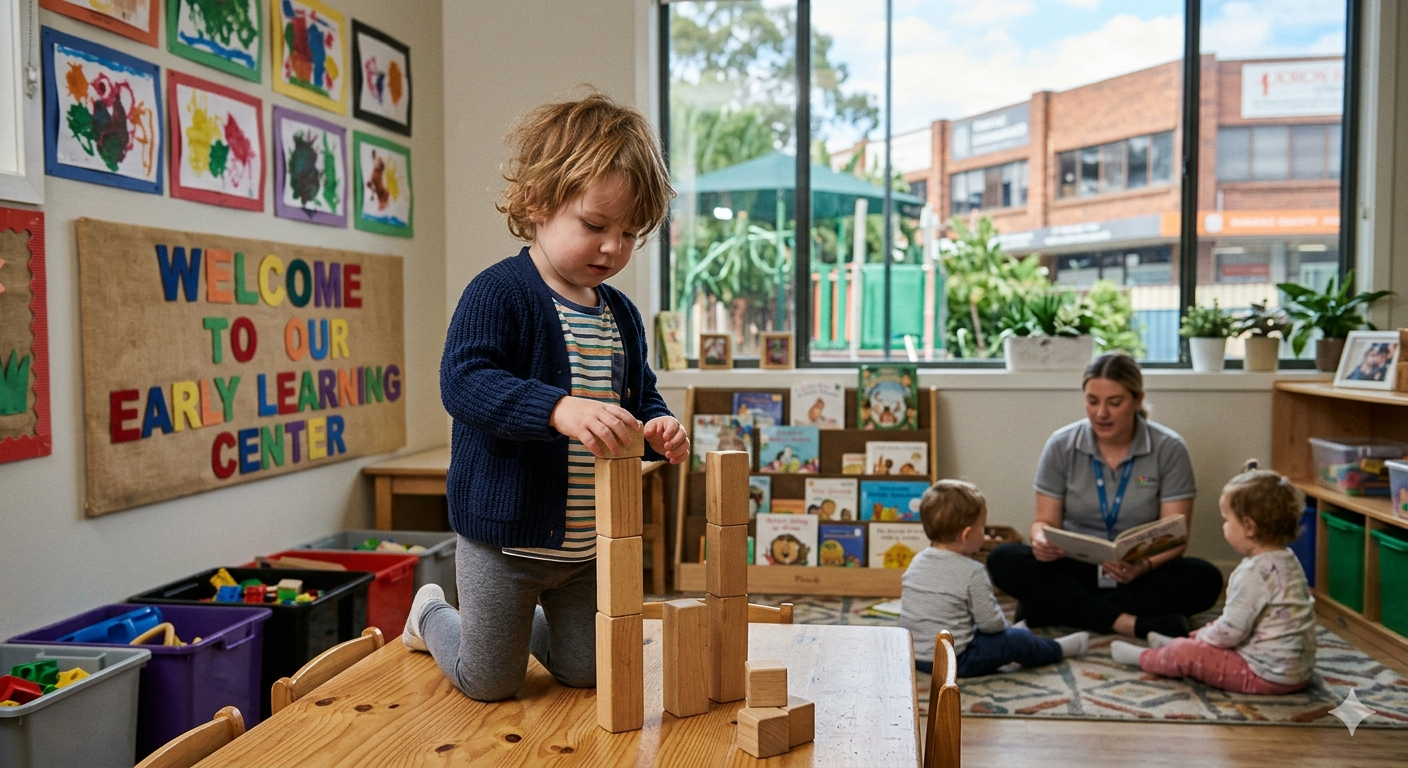
    If you walk into a top-tier early learning center in Lidcombe, you won’t see children sitting silently at desks. Instead, you will experience the dynamic buzz of play-based education.

    Whether it is sensory play with water and clay, collaborative building in the construction zone, or imaginative role-playing in a dramatic play corner, every activity is meticulously mapped to the Early Years Learning Framework (EYLF). Through these activities, educators subtly introduce problem-solving concepts, spatial awareness, and early scientific inquiry.

    Embracing Our Vibrant Lidcombe Community

    One of the unique advantages of choosing local childcare in Lidcombe is the rich cultural tapestry of our neighborhood. Children growing up here have a unique opportunity to develop global mindsets from a very young age.

    When a kindy or preschool celebrates diverse cultures, languages, and traditions, it does more than just host a fun event. It teaches children empathy, refines their communication skills, and helps them build confidence in navigating a diverse world. It turns the local learning center into a microcosm of our broader, harmonious community.

    Choosing the Right Path for Your Family

    Every child is an individual, and there is no single “right” formula. Some families thrive in an all-day long daycare framework that accommodates busy working hours, while others look specifically for dedicated sessional kindergarten hours.

    When touring potential centers in the Lidcombe area, look beyond the toys and the facilities. Observe the interactions: Are the educators deeply engaged? Is the environment inclusive? Does the curriculum feel alive? Investing time in finding the perfect childcare in Lidcombe today sets the stage for a lifetime of confident, joyful learning.


  • Transitioning to Care: How to Prepare Your Child for an Early Learning Centre in Lidcombe

    Transitioning to Care: How to Prepare Your Child for an Early Learning Centre in Lidcombe

    Choosing the right childcare in Lidcombe is a significant milestone for any family. Whether you are enrolling your child in a daycare, a specialized preschool, or a local kindy, the transition period can feel overwhelming for both parents and little ones.

    As a premier early learning centre, we understand that quality education starts with a sense of belonging and security. Here is a quick guide to help your family navigate the first few weeks of kindergarten or care.


    1. Familiarize Your Child with the New Environment

    Before the first day at your chosen Lidcombe childcare, try to drive past the centre or visit the nearby parks. If the early learning centre offers orientation sessions, take advantage of them. Familiarity breeds confidence, making the first drop-off at daycare much smoother.

    2. Consistency is Key for Early Education

    Children thrive on routine. Whether they are attending a formal kindergarten program or a play-based kindy, having a consistent morning schedule helps them feel prepared.

    • Morning Routine: Keep breakfast and getting ready calm.
    • Goodbye Ritual: A quick, loving goodbye is better than a lingering one.
    • Pick-up: Try to be on time during the first week to build trust.

    3. Why Quality Childcare in Lidcombe Matters

    The transition to preschool is more than just “babysitting.” It is the beginning of a lifelong journey in education. A high-quality early learning centre provides:

    • Social interaction with peers.
    • Structured play that promotes cognitive development.
    • Professional educators who understand early childhood milestones.

    Finding the Best Fit for Your Family

    If you are searching for childcare Lidcombe parents trust, look for a centre that prioritizes both emotional well-being and academic readiness. From toddler daycare to preschool prep, the right environment makes all the difference.

    Ready to start your child’s journey in education? Contact our Lidcombe early learning centre today to learn more about our enrolments and how we support children during their first steps into kindy and beyond.

  • Balanced Nutrition for Children Aged 0–6: A Foundation for Lifelong Health | Lidcombe ChildCare

    Balanced Nutrition for Children Aged 0–6: A Foundation for Lifelong Health | Lidcombe ChildCare

    Nutrition during early childhood plays a critical role in shaping a child’s physical health, brain development, immune system, and long-term well-being. At Lidcombe ChildCare, we understand that healthy eating habits begin early and have a lasting impact. In this article, we explore the core principles of balanced nutrition for children aged 0–6 and offer practical tips to help families support their child’s growth.


    Why Early Nutrition Matters

    The first six years of life represent a period of rapid development. During this time, a child’s body and brain are growing faster than at any other point in life. Proper nutrition provides the essential building blocks — including proteins, healthy fats, vitamins, and minerals — that support:

    • Brain development and cognitive function
    • Strong bones and muscles
    • A healthy immune system
    • Emotional regulation and behavior
    • Long-term habits around food and health

    At Lidcombe ChildCare, we integrate nutrition education into our daily routines and encourage positive attitudes toward food from a young age.


    Key Nutritional Components for Children 0–6

    1. Protein
    Essential for growth, tissue repair, and immune function.
    Sources: Lean meats, eggs, dairy, tofu, legumes, and fish (age-appropriate).

    2. Fruits and Vegetables
    Rich in vitamins, minerals, and fiber. They support digestion and immunity.
    Tip: Offer a variety of colors and textures to make mealtimes enjoyable.

    3. Whole Grains
    Provide long-lasting energy and support brain function.
    Sources: Wholemeal bread, brown rice, oats, and quinoa.

    4. Dairy or Calcium Alternatives
    Important for bone and teeth development.
    Sources: Milk, cheese, yoghurt, or fortified plant-based alternatives.

    5. Healthy Fats
    Support brain development and energy needs.
    Sources: Avocado, olive oil, nuts (if age-appropriate), and fatty fish.

    6. Water
    The best drink for hydration. Limit sugary drinks and encourage regular water intake.


    Practical Tips for Parents

    • Keep meals regular and structured: Children thrive on predictable routines. Offer three main meals and two healthy snacks each day.
    • Involve children in food preparation: Letting children help with simple tasks like washing vegetables or stirring ingredients increases their interest in trying new foods.
    • Respect hunger and fullness cues: Avoid pressuring children to eat. Instead, offer nutritious options and let them listen to their bodies.
    • Minimize processed foods: While occasional treats are fine, focus on whole, minimally processed ingredients as the foundation of each meal.
    • Be a role model: Children learn by example. Eating a variety of healthy foods yourself encourages them to do the same.

    At Lidcombe ChildCare, we work closely with families to ensure that each child receives nutritious meals that support their health and developmental needs.


    Supporting Healthy Eating in Early Learning Environments

    Our team at Lidcombe ChildCare is committed to creating a positive food environment. This includes:

    • Providing balanced and age-appropriate meals and snacks
    • Accommodating dietary restrictions and cultural food preferences
    • Teaching children about food groups and healthy choices through play-based learning
    • Encouraging polite mealtime behaviors and social interaction

    We believe that when nutrition and education go hand in hand, children are better prepared to grow, learn, and thrive.


    About Lidcombe ChildCare
    Lidcombe ChildCare offers a nurturing, safe, and developmentally appropriate environment for children aged 0–6 years. Our commitment to health and well-being is reflected in every aspect of our program — including the meals we serve and the habits we promote.

    To learn more about how we support your child’s nutritional needs, visit us or contact our team for more information.

    early learning centre Lidcombe child care preschool childcare
  • Understanding Growth and Vision Development in Children Aged 0–6 Years | Lidcombe ChildCare

    Understanding Growth and Vision Development in Children Aged 0–6 Years | Lidcombe ChildCare

    The early years of a child’s life, from birth to six years old, are a time of rapid growth and profound development. At Lidcombe ChildCare, we recognise the importance of supporting children holistically during this crucial period — not only in terms of cognitive, emotional, and physical development, but also in areas that are often overlooked, such as vision.

    In this post, we explore key milestones in early childhood growth and outline what parents should know about vision development in young children.


    Key Stages of Growth (0–6 Years)

    0–12 months: Sensory awakening and bonding
    Infants begin to respond to voices, faces, and light. Physical development is focused on head control, grasping, rolling, and crawling. Emotional bonds with caregivers are formed through consistent nurturing and interaction.

    1–3 years: Discovery and independence
    Toddlers rapidly expand their vocabulary, learn to walk confidently, and begin to assert their independence. They explore their environment through play and imitation, and develop basic social and emotional skills.

    3–6 years: Cognitive and social development
    Preschoolers become more aware of themselves and others. They start forming friendships, following rules, and engaging in imaginative play. Cognitive skills such as reasoning, problem-solving, and language comprehension evolve quickly.

    At Lidcombe ChildCare, our early learning programs are tailored to support each stage of development, ensuring that children receive age-appropriate experiences that nurture their potential.


    Vision Development in Early Childhood

    Vision is one of the most vital senses for learning, yet it develops gradually over time. Understanding this process can help caregivers identify early signs of visual challenges and seek timely support.

    Birth to 3 months:
    Newborns can see shapes and light but have blurry vision. By two to three months, they begin to follow objects with their eyes and show preference for faces.

    4–12 months:
    Hand-eye coordination develops as babies reach for toys. Depth perception starts to form, and tracking moving objects improves.

    1–3 years:
    Toddlers begin to develop visual memory and recognition. They use their vision to explore their surroundings and solve simple problems through observation.

    3–6 years:
    Children refine their focusing ability, hand-eye coordination, and visual motor skills. This is also the stage where vision problems such as lazy eye (amblyopia) or strabismus may become noticeable.

    Regular eye checks are recommended during this period, even if no obvious issues are present. At Lidcombe ChildCare, we encourage families to monitor visual development as part of their child’s overall health, and we work closely with professionals when additional support is needed.


    Supporting Your Child’s Development

    Whether it’s through structured activities, creative play, or daily routines, the early years are full of opportunities to support healthy growth. At Lidcombe ChildCare, we are committed to nurturing every aspect of a child’s development — including their physical, cognitive, emotional, and sensory needs.

    We believe that early awareness and education play a vital role in raising confident, well-adjusted children. If you have concerns or questions about your child’s development or vision, our team is here to support and guide you.


    About Lidcombe ChildCare
    Located in the heart of Lidcombe, our centre provides a safe, engaging, and inclusive environment for children aged 0–6. Our educators are trained to recognise developmental milestones and support children’s learning through evidence-based practices.

    Visit us today to learn how Lidcombe ChildCare can be a partner in your child’s early years journey.

    early learning centre Lidcombe child care preschool childcare
  • Why Hearing Matters: Supporting Early Hearing Health at Lidcombe ChildCare

    Why Hearing Matters: Supporting Early Hearing Health at Lidcombe ChildCare

    At Lidcombe ChildCare, we know that a child’s ability to hear clearly has a powerful impact on their learning, social development, and language skills. Good hearing allows children to build relationships, follow instructions, enjoy stories and songs, and fully participate in the world around them.

    The Role of Hearing in Early Childhood

    Hearing is one of the first senses to develop in babies — even before they’re born. In the early years, it plays a key role in:

    • Language development
    • Emotional bonding and social interaction
    • Safety awareness (e.g. hearing traffic, alarms, voices)
    • Cognitive growth and school readiness

    Signs Your Child May Have Hearing Difficulties

    Hearing loss in young children is more common than many parents realize. It can be temporary (due to ear infections or fluid buildup) or permanent. Common signs include:

    • Not responding to their name
    • Speaking loudly or unclearly
    • Frequently asking “What?” or not following directions
    • Delayed speech or limited vocabulary
    • Easily distracted or showing behavioural frustration in noisy settings

    How Lidcombe ChildCare Monitors and Supports Hearing Health

    At Lidcombe ChildCare, we closely observe each child’s communication patterns and behaviour. Our educators are trained to notice early signs of possible hearing issues, such as:

    • Lack of response to sounds or voices
    • Speech that doesn’t match age-appropriate milestones
    • Difficulty in group settings or following routines

    If we observe any concerns, we work respectfully with families to suggest follow-up with a GP or audiologist.


    What Parents Can Do at Home

    • Talk and read to your child daily, even if they don’t respond verbally
    • Avoid loud environments for long periods
    • Watch for signs of ear pain, fever, or tugging at the ears
    • Attend regular hearing checks, especially if there’s a family history of hearing loss
    • Create a quiet space for focused listening and conversation
    early learning centre Lidcombe child care preschool childcare
  • Supporting Your Child’s Language Development – Insights from Lidcombe ChildCare

    Supporting Your Child’s Language Development – Insights from Lidcombe ChildCare

    At Lidcombe ChildCare, we understand that strong language skills are essential to a child’s overall development. From a baby’s first sounds to full sentences, language plays a crucial role in how children express themselves, interact with others, and learn about the world.

    What Is Language Development?

    Language development refers to a child’s growing ability to understand and use language. It includes:

    • Expressive language – speaking, naming things, forming sentences, telling stories
    • Receptive language – understanding instructions, following conversations, recognizing words

    Language Milestones by Age

    Every child develops at their own pace, but here are some general milestones to look for:

    • 0–12 months: cooing, babbling, responding to sounds, making eye contact
    • 1–2 years: saying first words, pointing to objects, following simple instructions
    • 2–3 years: forming 2–3 word sentences, growing vocabulary, asking questions
    • 3–4 years: telling short stories, understanding more complex sentences, playing with language
    • 4–6 years: speaking clearly, using correct grammar, engaging in back-and-forth conversations

    How Lidcombe ChildCare Supports Language Growth

    At Lidcombe ChildCare, we create an engaging, language-rich environment where children feel safe to explore, speak, and learn. Our educators:

    • Encourage daily conversations and storytelling
    • Use songs, books, and group activities to build vocabulary
    • Support bilingual learners and non-verbal communication
    • Identify and gently support children who may need extra help

    We also work closely with families to ensure that language support continues at home, through everyday routines and play.


    When to Seek Extra Help

    Some children may need additional support with language development. Signs to look for include:

    • Limited vocabulary for their age
    • Difficulty understanding simple instructions
    • Frustration when trying to communicate
    • Speech that’s hard to understand after age 3

    If you have concerns, our team at Lidcombe ChildCare can guide you toward the right resources, including speech pathologists and early intervention services.

    early learning centre Lidcombe child care preschool childcare
  • Lidcombe ChildCare: What Every Parent Should Know About the Psychology of Young Children

    Lidcombe ChildCare: What Every Parent Should Know About the Psychology of Young Children

    A Practical Perspective from Lidcombe ChildCare

    Understanding how young children think and feel is not always easy. One minute they’re laughing, the next they’re upset over a toy that looks slightly different than expected. As confusing as these shifts may be, they’re often normal responses rooted in how a child’s brain is developing.

    At Lidcombe ChildCare, we’ve worked with hundreds of children over the years. While every child is unique, certain psychological patterns tend to appear across all early learners. For parents, recognizing these traits can turn daily frustrations into opportunities for connection and growth.

    They Live in the Present

    Young children don’t yet grasp time the way adults do. They are wired to respond to what’s happening right now. This explains why distractions can be more effective than lectures, and why transitions—like leaving the playground—can cause so much distress.

    In our Lidcombe ChildCare classrooms, we use visual routines and verbal cues to help children prepare for what’s coming next. Structure provides a sense of safety for children who don’t yet have a full concept of time.

    Emotions Come First, Logic Later

    A young child’s brain is still building the pathways that allow for rational thinking and self-control. Until then, emotions lead the way. When a toddler throws a tantrum, they’re not being manipulative—they’re overwhelmed.

    Our educators are trained to respond with calm consistency, helping children name their feelings and offering tools to express those feelings more appropriately. This process takes time, but it lays the foundation for emotional resilience.

    Learning Looks Like Play

    To adults, play may seem like fun, but to children, it’s serious work. Through play, children test ideas, role-play real-life situations, and practice communication. The classroom at Lidcombe ChildCare is designed to encourage open-ended play that supports language, social, and cognitive development.

    Instead of rushing children toward early academics, we observe how they play—and from there, we know how to guide their growth.

    Their Behavior Is Communication

    Young children don’t always have the words to explain what they need, so they use behavior instead. A sudden refusal to join group time may reflect tiredness, hunger, or something as simple as overstimulation.

    At Lidcombe ChildCare, we interpret behavior as a message—not a problem. With this mindset, we can respond thoughtfully rather than react emotionally.

    Final Thoughts: Working With, Not Against, Development

    Raising or caring for a young child is never a linear process. Some days feel smooth, others feel chaotic. But when we understand what children are capable of—and what they’re not yet ready for—we shift our expectations.

    At Lidcombe ChildCare, psychology isn’t a side note. It shapes how we talk to children, how we set up our rooms, and how we partner with families. When care is developmentally informed, children thrive.

  • Lidcombe ChildCare: Understanding Child Psychology – Key Traits in Early Development

    Lidcombe ChildCare: Understanding Child Psychology – Key Traits in Early Development

    A Lidcombe ChildCare Perspective on Supporting Growing Minds

    At Lidcombe ChildCare, we believe that understanding a child’s psychological development is just as important as meeting their physical needs. Child psychology—the study of how children grow mentally, emotionally, and socially—gives parents and educators the tools to support children more effectively through their developmental journey.

    In this post, we explore the core psychological traits of young children, and how child care providers in Lidcombe can nurture those traits to foster healthy emotional and social growth.

    Key Psychological Traits of Young Children

    1. Big Emotions, Quick Recovery

    Young children often experience strong emotional reactions. Whether it’s sudden tears or loud laughter, these emotions can change quickly. At Lidcombe ChildCare, our educators are trained to respond with patience and empathy—helping children name their feelings and begin learning how to manage them in age-appropriate ways.

    2. Natural Curiosity and the Drive to Explore

    Children learn about the world through hands-on exploration. Their brains are wired to ask questions, touch, observe, and experiment. High-quality childcare environments like ours in Lidcombe create safe, stimulating spaces where curiosity is encouraged and learning is embedded in everyday play.

    3. Growing Independence

    As children grow, they gradually shift from dependence to independence. Simple tasks like putting on shoes or choosing an activity help build confidence and decision-making skills. At Lidcombe ChildCare, we offer daily opportunities for children to make choices, express preferences, and gain a sense of autonomy.

    4. Imitation as a Learning Tool

    Children mimic the behaviors and language of those around them. This is a powerful form of learning—and one reason why positive role models are essential in early childhood education. Our Lidcombe ChildCare team is mindful of their tone, actions, and words, knowing that children are always watching and learning.

    Why Child Psychology Matters in Early Learning

    Understanding how children think and feel helps educators create emotionally supportive, developmentally appropriate environments. It also helps parents respond to challenging behavior with compassion rather than frustration.

    At Lidcombe ChildCare, we integrate child psychology principles into our daily routines, activities, and interactions—ensuring each child feels safe, valued, and ready to learn.

    Choosing a Child Care Centre in Lidcombe That Understands Your Child

    If you’re a parent in Lidcombe searching for childcare that goes beyond basic supervision, choose a centre that understands the psychological development of children. Lidcombe ChildCare combines professional knowledge, emotional support, and personalized attention to nurture every child’s potential.

  • Lidcombe ChildCare Supporting a Child with ASD: A Parent’s Journey with Hope and Understanding

    Lidcombe ChildCare Supporting a Child with ASD: A Parent’s Journey with Hope and Understanding

    (With the help of Lidcombe Child Care)

    Raising a child is a unique and beautiful challenge — but when your child is diagnosed with ASD (Autism Spectrum Disorder), parenting takes on a whole new meaning. Emotions range from love to confusion, from deep concern to fierce advocacy. For many parents like me, it’s not about fixing our children, but about understanding their world and helping others see their potential.

    This is our story — and how Lidcombe Child Care became one of the most supportive environments in our journey.


    Recognizing the Early Signs

    We began noticing that our daughter preferred routines, struggled with changes, and avoided eye contact. She was sensitive to loud sounds and sometimes didn’t respond to her name. While every child develops differently, these signs led us to seek professional assessment, and eventually, we received an ASD diagnosis.

    It was a moment filled with both clarity and uncertainty — finally, we had a name for what we were seeing, but many questions remained.


    Finding the Right Support

    One of the biggest challenges parents face after a diagnosis is finding a childcare or early learning center that truly understands neurodiversity. That’s where Lidcombe Child Care made a difference.

    The educators there showed not only patience, but real empathy. They adjusted their routines to reduce sensory triggers, created visual aids to support communication, and provided gentle transitions between activities. Most importantly, they saw my child not just as a list of challenges — but as a whole person with talents, preferences, and potential.

    Their open communication and willingness to collaborate with parents and therapists made a huge difference in our child’s daily experience.


    Lessons I’ve Learned as a Parent of a Child with ASD

    1. Progress looks different for every child. It’s not about comparing milestones, but celebrating individual achievements — even the smallest ones.
    2. Routine creates safety. Visual schedules, repeated patterns, and advance preparation help reduce anxiety.
    3. Meltdowns are not tantrums. They are signs of overwhelm, and require compassion, not punishment.
    4. Inclusion matters. Children with ASD thrive in environments where they feel seen, heard, and respected.
    5. You’re not alone. Support groups, professional guidance, and centers like Lidcombe Child Care remind us that a community exists.

    Why Lidcombe Child Care Made a Difference

    In a world where some early childhood centers are still catching up on inclusive education, Lidcombe Child Care stands out for its commitment to understanding children with additional needs.

    Their staff are trained, but more importantly, they are emotionally present. They treated my daughter with dignity and care, and included her in every part of the program. From social play to quiet time, she was part of a learning community — not placed on the sidelines.


    Final Thoughts: There Is Hope

    Parenting a child with ASD is not always easy, but it is full of meaningful moments, quiet victories, and deep connections. With the right environment — like the one we found at Lidcombe Child Care — our children can thrive.

    If you’re a parent navigating ASD, trust your instincts, seek understanding, and surround your child with people who believe in their ability to grow. You don’t have to do it alone.

  • Lidcombe ChildCare Parenting a Child with ADHD: Challenges, Insights, and Hope

    Lidcombe ChildCare Parenting a Child with ADHD: Challenges, Insights, and Hope

    (Featuring experiences with Lidcombe Child Care)

    Parenting is never a one-size-fits-all journey, and when your child is diagnosed with ADHD (Attention Deficit Hyperactivity Disorder), the road can feel even more unpredictable. As a parent, you often find yourself balancing between patience and exhaustion, love and frustration, hope and doubt. Through my journey, I’ve come to realize that while ADHD presents unique challenges, it also unlocks new ways of understanding, growth, and connection — both with our children and ourselves.

    Recognizing the Signs

    My child was full of energy, curiosity, and impulsive joy. But as time went on, simple routines — getting dressed, finishing a meal, following classroom rules — turned into daily battles. We started hearing words like “disruptive,” “distracted,” and “unfocused” from teachers. That’s when we began seeking answers and, eventually, received an ADHD diagnosis.

    The Emotional Rollercoaster

    At first, the diagnosis was overwhelming. There were moments of guilt (“Did I do something wrong?”), denial (“Maybe it’s just a phase”), and fear (“Will my child ever thrive in a traditional environment?”). But the more I learned, the more I understood that ADHD isn’t a reflection of bad parenting or a broken child — it’s a different neurodevelopmental path that requires understanding, structure, and support.

    Support Systems Matter

    Finding the right early learning environment was crucial. Lidcombe Child Care became a turning point for us. The educators there were not only patient and kind but also genuinely committed to understanding each child’s individual needs. They worked closely with us to create consistent routines, calm strategies, and positive reinforcement approaches that helped my child feel more secure and supported.

    What impressed me most about Lidcombe Child Care was their willingness to communicate openly — they didn’t just label behavior, they tried to understand it. They focused on building a relationship with my child, which made a world of difference in her behavior and confidence.

    What I’ve Learned (and Keep Learning)

    1. Structure is safety. Children with ADHD thrive on clear expectations, visual schedules, and predictable routines.
    2. Positive reinforcement works better than punishment. Celebrating small successes builds confidence and motivation.
    3. Pick your battles. Not every misstep is worth a meltdown — for you or your child.
    4. Self-care isn’t selfish. Parenting a child with additional needs is draining. You can’t pour from an empty cup.
    5. Community helps. Whether it’s teachers at Lidcombe Child Care, therapists, or other parents — connection and shared experience are lifelines.

    A Message to Other Parents

    If you’re raising a child with ADHD, please know: you are not alone. There is no perfect formula, and yes, some days are incredibly hard. But with the right support — at home, in school, and within yourself — your child can thrive. Celebrate their creativity, their energy, their spark. The world may not always understand them, but with your guidance and love, they will find their place.